Olivia Simon · 20 October 2026
How Feedback Mechanisms Drive Innovation in Local Digital Marketing Ecosystems
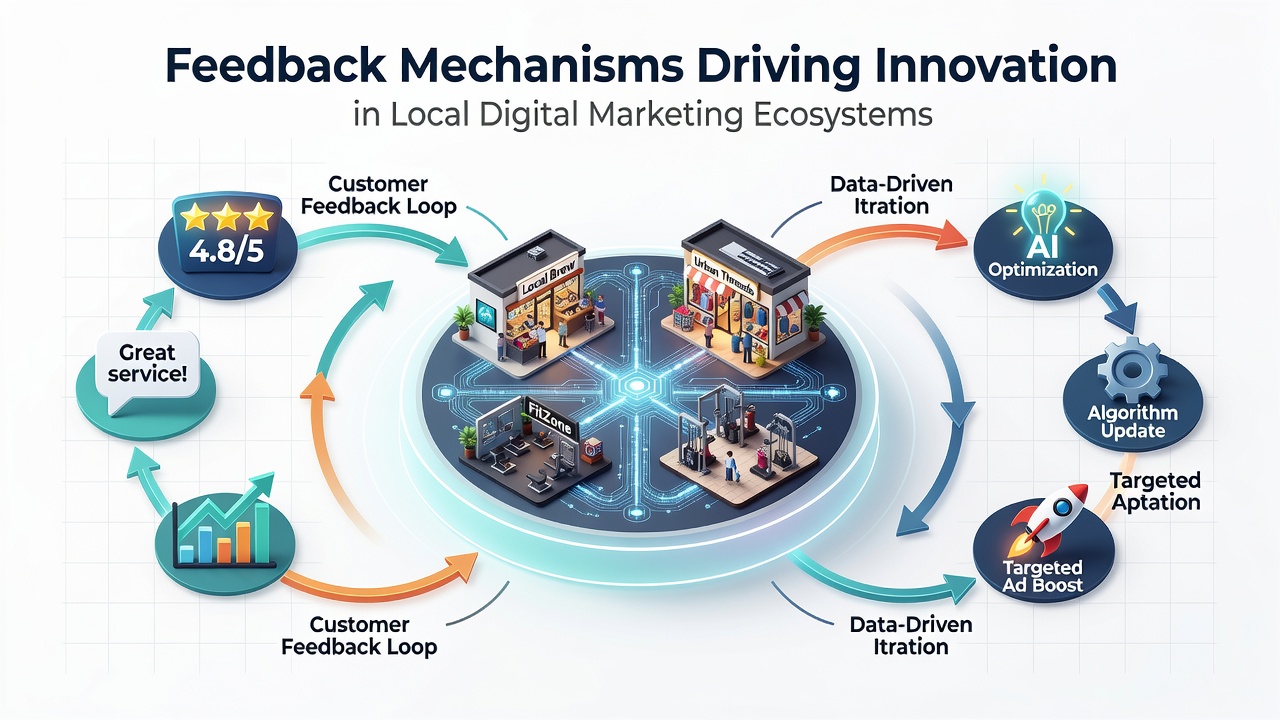
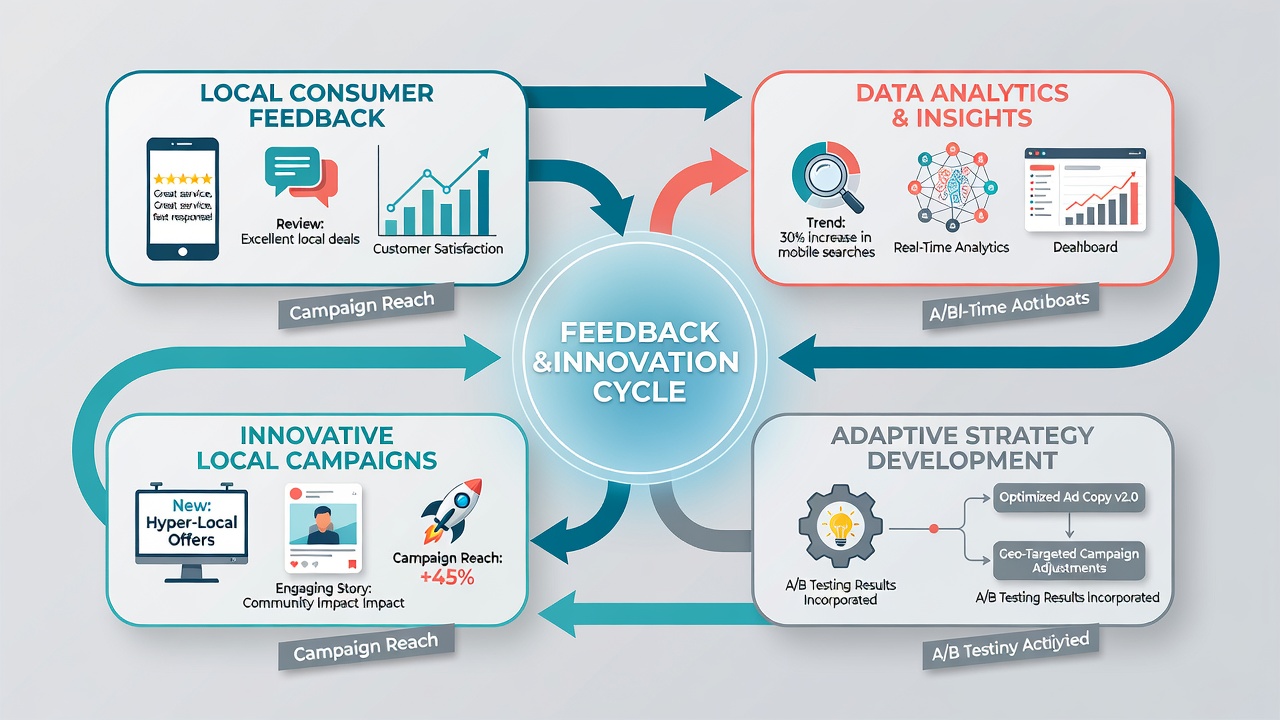
Feedback mechanisms in local digital marketing ecosystems function through continuous loops of data collection from customer interactions, platform analytics, and community responses that allow regional businesses to refine their approaches. These systems operate by gathering inputs from online reviews, engagement signals, and search performance metrics, then channeling that information back into strategy adjustments across neighborhoods and cities. In October 2026 data from multiple regions indicated rising integration of automated feedback tools among small enterprises seeking to maintain visibility amid competitive local markets.
Core Components of Feedback Loops
Local digital marketing relies on several interconnected feedback channels that researchers have documented in studies across North America and Europe. Customer review platforms supply direct comments that businesses parse for patterns in preferences and service gaps, while social media listening tools capture real-time sentiments shared within geographic communities. Search engine result adjustments based on user behavior further contribute, creating cycles where initial campaigns generate responses that inform subsequent iterations. Observers note that these components work together because isolated data points rarely produce meaningful change without cross-referencing across sources.
Customer Input Channels
Reviews posted on directory sites and mapping services deliver granular details about location-specific experiences, prompting adjustments in promotional messaging or offer timing. Businesses in mid-sized cities have incorporated sentiment analysis software to process thousands of comments monthly, identifying recurring themes that guide content creation. Data from industry reports shows that establishments responding publicly to reviews within 48 hours often see measurable shifts in subsequent rating distributions.
Platform Analytics Integration
Analytics dashboards from major search and social platforms provide quantitative signals such as click-through rates and dwell times that reflect audience resonance with localized content. When combined with geographic filters, these metrics highlight which neighborhoods respond differently to the same campaign elements. Studies conducted by academic institutions reveal that teams which map analytics outputs against physical foot traffic records achieve tighter alignment between online efforts and offline outcomes.
Innovation Triggers from Feedback Data
Feedback mechanisms prompt innovation when patterns emerge that challenge existing assumptions about local audiences. For instance, repeated comments about delivery timing in suburban areas have led some retailers to experiment with time-specific promotions delivered through targeted mobile notifications. In another documented case, businesses adjusted their visual assets after analytics indicated lower engagement with certain imagery among specific age groups within a single metropolitan zone. These adaptations occur because the data arrives in sufficient volume and detail to justify resource allocation toward new formats or channels.
What's interesting is how smaller operations use aggregated feedback from multiple local competitors to benchmark their own performance without direct collaboration. Trade associations have compiled anonymized datasets that allow participants to compare response rates across similar business categories in adjacent regions. This comparative view encourages experimentation with emerging formats such as short-form video overlays that incorporate community landmarks or events.
Regional Variations in Application
European cities demonstrate distinct feedback utilization patterns compared with North American counterparts because regulatory frameworks around data collection differ. Reports from the European Commission highlight how local marketers in EU member states integrate privacy-compliant feedback tools that still yield actionable insights for hyper-local campaigns. Meanwhile, Canadian firms often reference aggregated Statistics Canada releases on digital adoption to contextualize their own customer response data, creating hybrid strategies that blend public statistics with proprietary feedback.
Australian regional businesses have adopted similar approaches, drawing on government-published digital economy indicators to validate trends observed in their feedback streams. These cross-referenced methods reduce reliance on single-source inputs and support more resilient innovation cycles when individual platforms alter their algorithms.
Technology Supporting Feedback Processing
Software platforms designed for local scale aggregate inputs from disparate sources into unified dashboards that update in near real time. Machine learning models trained on historical local campaign data now flag anomalies in feedback volume that may signal emerging opportunities or issues. Those who've implemented these systems report faster iteration cycles, with some teams testing three to four message variations weekly instead of monthly. The underlying infrastructure processes both structured data like star ratings and unstructured text from comments, applying consistent categorization rules across languages and dialects common in diverse urban areas.
Conclusion
Feedback mechanisms continue to shape innovation trajectories in local digital marketing by supplying the raw material for targeted experimentation and resource reallocation. As regional ecosystems evolve through 2026 and beyond, the integration of multiple data streams supports more precise responses to community needs while maintaining compliance with varying regulatory environments. The documented patterns across continents indicate that sustained attention to these loops correlates with measurable performance stability for enterprises operating at the neighborhood level.