Greta Washington · 3 November 2026
Shifts in Community Resource Allocation Patterns During Economic Transitions for Waterfront Settlements
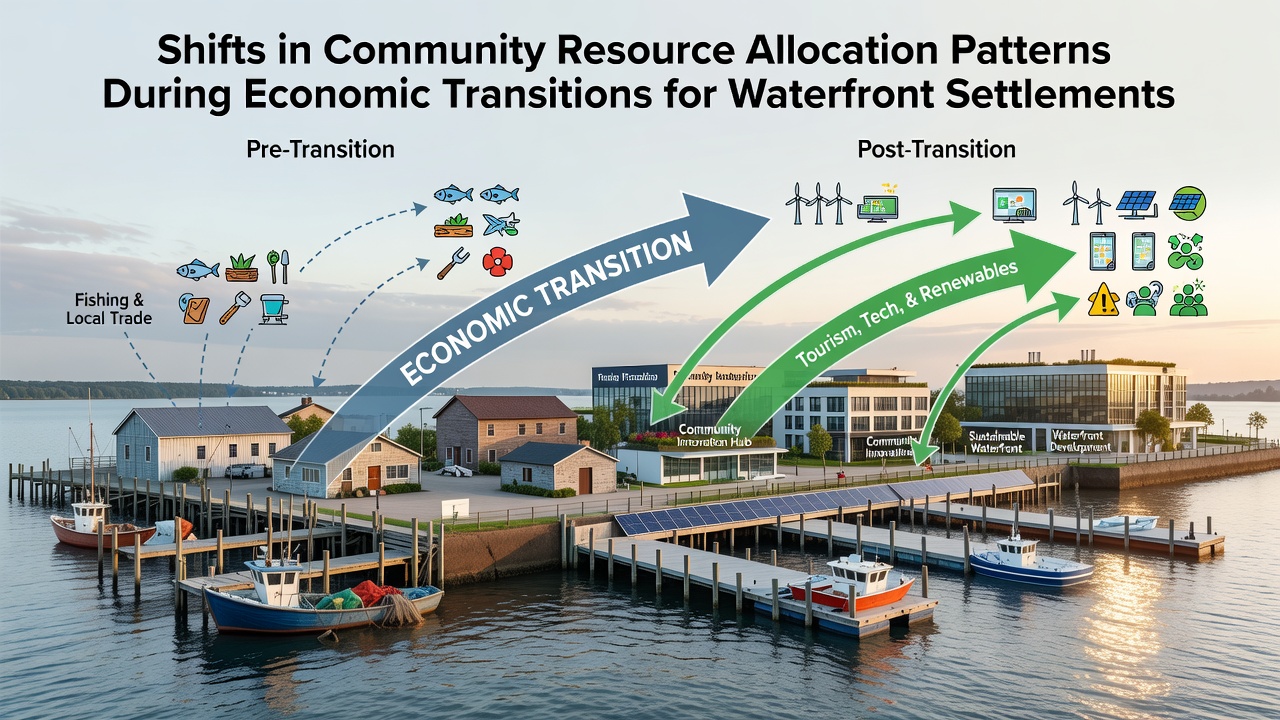
Waterfront settlements have experienced repeated adjustments in how local governments and residents direct funds toward housing, port maintenance, flood defenses, and public utilities whenever broader economic conditions shift from traditional maritime industries toward tourism, logistics modernization, or service-based economies, and records from multiple regions document these reallocations through census data, municipal budgets, and environmental assessments.
Researchers tracking these patterns note that communities often redirect capital away from fishing fleet subsidies and toward shoreline stabilization projects once industrial fishing declines, while tourism revenue streams prompt new investments in pedestrian pathways and visitor centers that replace older warehouse districts.
Historical Resource Patterns in Coastal Communities
Throughout the twentieth century, waterfront economies in North America and parts of Europe centered resource allocation on harbor dredging, ice plants, and rail connections that supported bulk cargo, yet data from port authorities reveal gradual reductions in those expenditures as containerization reduced labor needs and shifted priorities toward larger, deeper channels serving fewer but bigger vessels.
Observers have documented similar transitions in smaller harbors where municipal budgets moved from maintaining wooden piers to constructing concrete promenades once seasonal visitors outnumbered commercial fishers, and figures from regional planning agencies show corresponding increases in spending on wastewater treatment to meet standards required by hospitality developments.
Recent Economic Transitions and Allocation Changes
Since the early 2000s, many waterfront settlements have faced simultaneous pressures from climate-related insurance costs and declining traditional employment, prompting reallocations that favor green infrastructure over conventional seawalls in several documented cases, according to reports compiled by international development organizations.
One study covering settlements along the Great Lakes and Atlantic seaboard found that between 2015 and 2025, local authorities increased shares of capital budgets allocated to wetland restoration and elevated roadways while reducing outlays for routine maintenance of aging bulkheads, and these adjustments coincided with federal grant programs that rewarded nature-based solutions.
As of November 2026, updated municipal filings indicate continued movement of resources toward digital connectivity infrastructure such as fiber networks serving remote workers, a shift that has accompanied population stabilization in former industrial ports that previously lost younger residents to inland cities.
Geographic Variations Across Regions
Canadian Atlantic communities have shown distinct patterns where provincial funding has supported aquaculture facilities and cold-storage upgrades rather than large-scale tourism infrastructure, whereas Australian coastal towns have directed more resources into dune rehabilitation and managed retreat planning as insurance markets tightened following repeated storm events.
European examples from the Baltic and Mediterranean demonstrate further differences, with EU structural funds supporting port electrification projects that reduce emissions from docked vessels, and these investments often replace earlier allocations that prioritized road expansions connecting waterfronts to inland distribution centers.
Impacts on Public Services and Infrastructure
Resource shifts have produced measurable effects on schools, emergency services, and utilities in many settlements, where property tax bases expanded through new residential construction yet required simultaneous upgrades to water and sewer capacity that older systems could not support without additional borrowing.
Analyses of budget documents reveal that some municipalities have reallocated portions of tourism-generated revenue directly into workforce training programs aimed at hospitality and marine technology jobs, reducing reliance on general funds that previously covered broader social services.
Those tracking these changes note that settlements with stronger regional cooperation agreements tend to maintain steadier allocations for shared emergency response equipment, whereas isolated communities experience sharper swings when single economic sectors contract.
Case Examples from Multiple Continents
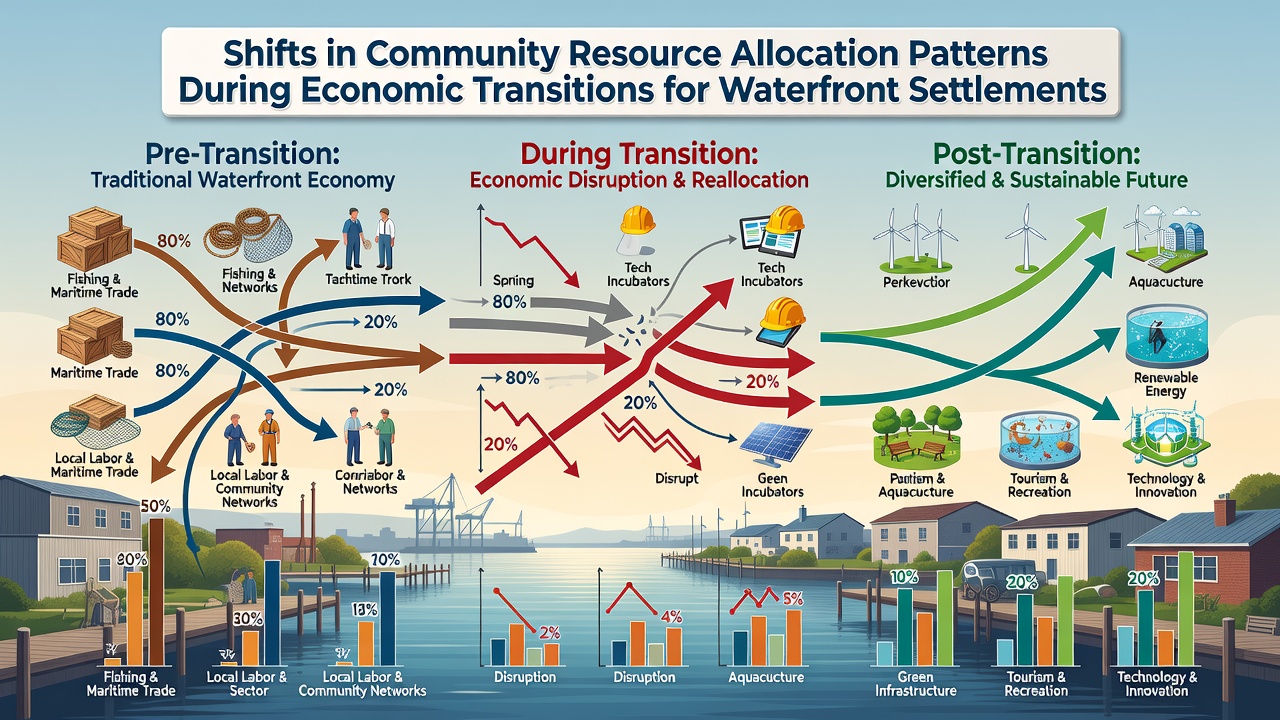
In one North American harbor, city records show a transition from allocating 60 percent of port-related capital to commercial fishing support in the 1990s to under 20 percent by the mid-2020s, with the balance directed instead toward public access marinas and mixed-use redevelopment zones that generate higher property assessments.
Similar documentation exists for Southeast Asian waterfront settlements where international development financing has supported mangrove restoration as a flood mitigation strategy, replacing earlier patterns that favored concrete embankments funded through national infrastructure programs, and these changes align with updated risk assessments released by regional environmental agencies.
Conclusion
Patterns of resource allocation in waterfront settlements continue to evolve as economic bases diversify and external pressures such as climate adaptation requirements influence budget priorities across different regions, and ongoing data collection by planning authorities provides the primary record of these adjustments without implying any single optimal path forward.